
Baby Helmet Therapy — How it Works
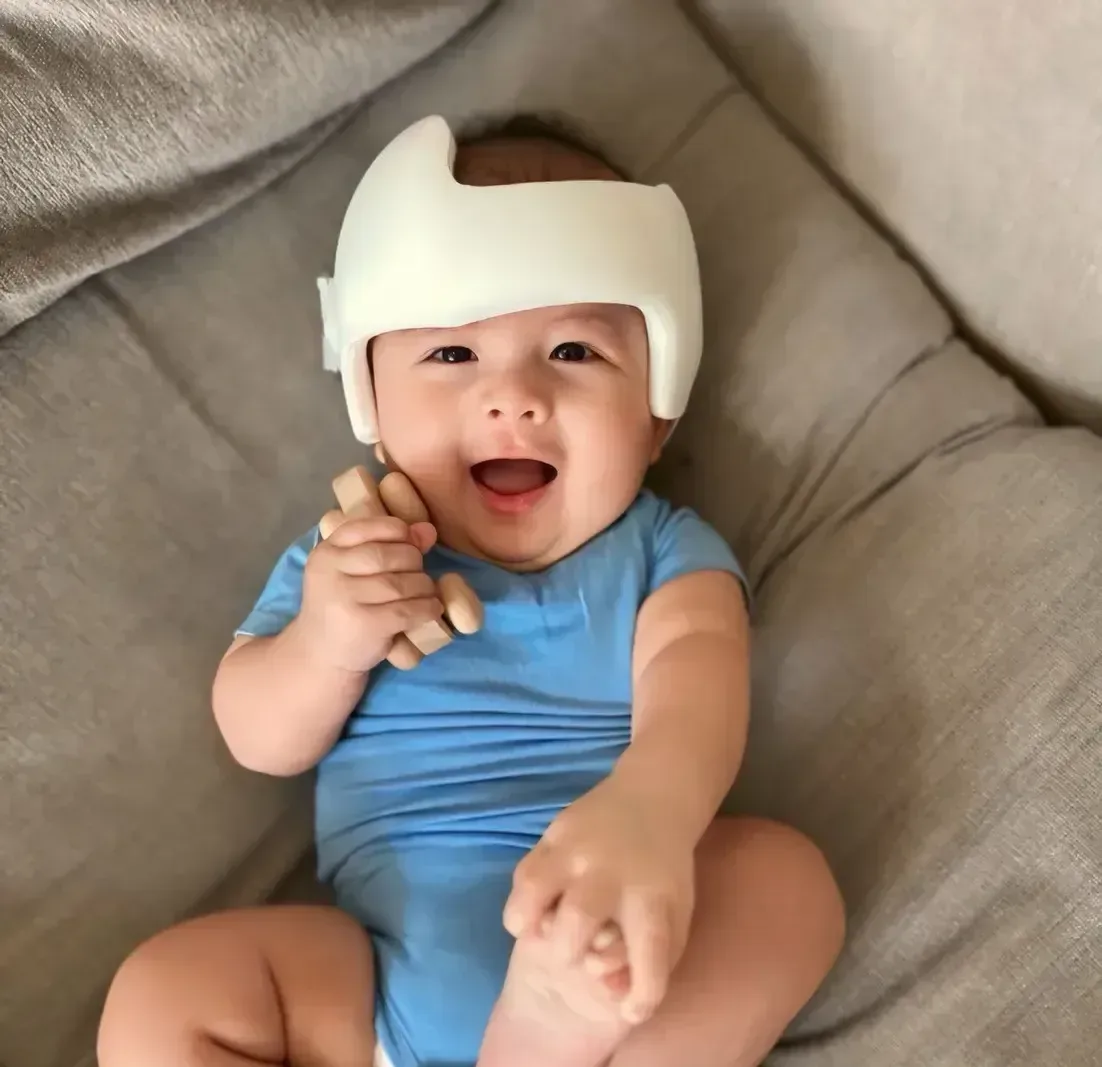
The DOC Band gently and gradually redirects your baby's natural head growth to correct plagiocephaly, or flat head syndrome.
100+ DOC Band clinics nationwide — find a free evaluation near you.
Why do babies wear helmets?
A young baby's skull is very soft and easily reshaped by outside pressure. Flat spots can form from everyday activities like sleeping on the back or time spent in a car seat.
Torticollis raises the risk further, causing a baby to favor one side of the head while lying down.
In moderate to severe cases, the flat spot won't resolve on its own. Since an external force caused the condition, an external, corrective force is often what's needed to guide it back to a normal shape.
Risk Factors

Active vs. passive treatment
During treatment, the helmet applies gentle holding pressure to specific parts of the head. As the baby grows, the helmet redirects that growth toward the affected areas — but not every helmet works the same way.
| DOC Band (Active) | Passive helmets |
|---|---|
| Custom-fit to your baby's exact head shape | Generic mold, not individually customized |
| Actively redirects head growth | Head simply grows into the existing mold over time |
| Promotes shorter overall treatment time | Treatment often takes longer to reach results |
How do I know if my baby needs helmet therapy?
If flat spots persist despite frequent repositioning and tummy time, your doctor may prescribe a helmet. No two cases of plagiocephaly are alike, and a baby's age plays a major role in the right course of treatment. Take our at-home assessment.
Deformational vs. synostic: It's important to first determine the cause of your baby's flat spots. Doctors do not use helmet therapy to treat craniosynostosis — a condition where the skull sutures close prematurely, which requires surgery. Understanding the underlying cause is critical before starting any treatment.
Repositioning first
Repositioning and tummy time can sometimes correct the head shape on their own. We reassess over time to track improvement.
Growth slows down
Brain growth slows significantly by this age. Babies may not respond as well to gentle repositioning alone, and a provider may prescribe a helmet.
Severity matters
In moderate to severe cases, and in older babies, flat spots often don't self-correct. Treatment is typically recommended if there's no improvement over time.


How long is the band worn per day?
Because treatment relies on natural head growth, babies wear the band for 23 hours each day, with a one-hour break for bath time and cleaning.
Is it uncomfortable? The holding pressure is gentle — no different than lying on the back. Most parents report their babies adjust within 24 hours, including during sleep and play.
The DOC Band uses hypoallergenic materials suited even to the most sensitive skin.
How long does treatment take?
Treatment length depends on the severity of the condition and the baby's growth rate. Most treatment times run 8 to 12 weeks, and starting between 4 and 6 months reduces overall treatment time while promoting optimal results.

In some cases, a baby benefits from a second band to complete correction. In practice, only 15% of babies continue treatment with a second band to reach optimal results.
What's the optimal age to begin treatment?
Experts recommend starting treatment between 4 and 6 months, during a period of rapid head growth. That said, helmet therapy can still be effective for infants up to 18 months of age.

Where can you find treatment?
Cranial Technologies offers 100+ plagiocephaly clinics nationwide, so you can find treatment close to home. If you have concerns about your baby's head shape, schedule a free evaluation today.